Recycling & Disposal
When an IBC tank can't be reconditioned — due to contamination, structural damage, or age — we ensure every component is recycled responsibly. Zero waste to landfill, guaranteed.
Schedule Recycling
Tell us how many tanks need recycling and we'll arrange pickup or drop-off.
How We Recycle IBC Tanks
Collection
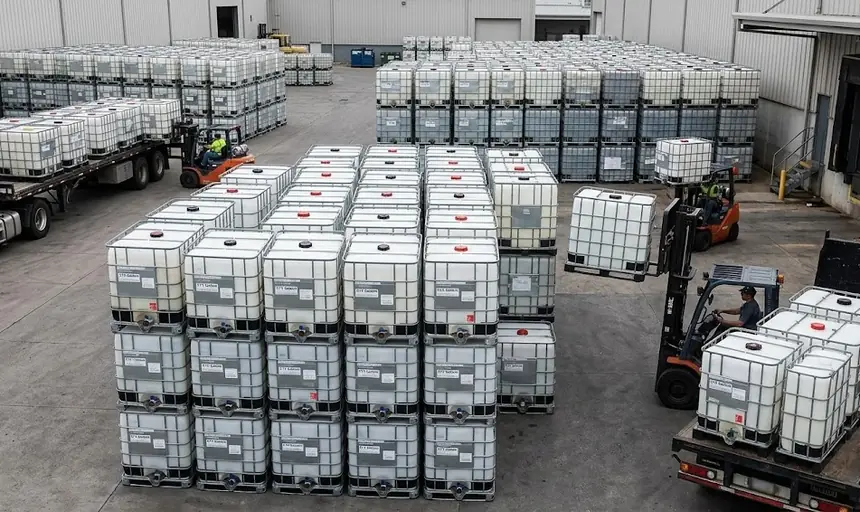
We pick up end-of-life IBC tanks from your facility or accept drop-offs at our warehouse. Any condition, any previous contents.
Disassembly
Each tank is carefully separated into its core components: HDPE plastic bottle, galvanized steel cage, wooden or composite pallet, and hardware.
Material Processing
HDPE bottles are shredded and pelletized for reuse in manufacturing. Steel cages are processed as scrap metal. Pallets are recycled or composted.
Certification
We provide recycling certificates documenting the weight and type of materials recycled — useful for your sustainability reporting and compliance needs.
What Gets Recycled
An IBC tank is made of highly recyclable materials. Here's where each component goes:
HDPE Bottle (~60 lbs)
The high-density polyethylene bottle is shredded, washed, and pelletized. Recycled HDPE is used to manufacture drainage pipes, plastic lumber, chemical containers, and automotive parts. HDPE maintains its mechanical properties through multiple recycling cycles.
Galvanized Steel Cage (~65 lbs)
The steel cage — including frame tubes, mesh panels, and corner braces — is processed through certified scrap metal recyclers. Galvanized steel is melted and re-forged into construction materials, appliances, and new industrial products.
Wooden Pallet (~10 lbs)
Pallets in good condition are repaired and reused. Damaged pallets are chipped for landscape mulch, biomass fuel, or animal bedding. Composite pallets are recycled through their respective material streams.
Hardware (Valves, Caps, Gaskets)
Functional valves and caps are inspected and reused on reconditioned tanks. Worn hardware is separated by material type — polypropylene, stainless steel, rubber — and diverted to appropriate recycling streams.
Material Breakdown by Weight
A standard 275-gallon IBC tank weighs approximately 135 pounds. Here is how that weight breaks down by material, and exactly what happens to each component during our recycling process.
HDPE Plastic
High-density polyethylene is the primary material in the inner bottle. After shredding and washing, the HDPE is pelletized into resin that can be used to manufacture drainage pipes, plastic lumber, new chemical containers, automotive components, and construction materials. HDPE retains its structural properties through multiple recycling cycles, making it one of the most efficiently recyclable plastics.
Galvanized Steel
The steel cage represents the heaviest single component. Galvanized steel is processed through certified scrap metal facilities where it is melted in electric arc furnaces and re-forged into new steel products. Steel is infinitely recyclable without loss of quality — the same steel atoms can be recycled into construction beams, appliances, automotive parts, or new industrial containers.
Wood Pallet
Wooden pallets in reusable condition are repaired and reissued. Damaged pallets are chipped into landscape mulch, biomass fuel, or animal bedding. Composite pallets are separated by material type and recycled through their respective streams. Our pallet recovery rate exceeds 95%.
Hardware
Valves, caps, gaskets, and fasteners make up a small percentage by weight but are still handled responsibly. Functional hardware is reused on reconditioned tanks. Non-functional components are separated by material — polypropylene, stainless steel, rubber — and sent to appropriate recycling facilities.
Complete Recycling Process Flow
From the moment a tank arrives at our facility to the final material output, here is the complete journey an end-of-life IBC tank takes through our recycling operation.
Phase 1: Intake & Assessment
Every end-of-life tank is photographed, weighed, and logged into our tracking system. We record the manufacturer, age, previous contents (from labels and SDS documentation), and the reason for recycling (structural failure, contamination, excessive wear, or customer request). This data feeds our analytics, helping us identify trends in tank failure modes and inform our reconditioning quality standards.
Phase 2: Safe Drainage & Residual Management
Before disassembly, any remaining contents are safely removed. Non-hazardous liquids are captured and processed through our wastewater treatment system or collected for appropriate disposal. Hazardous residuals are handled by our licensed hazardous waste management partners with full documentation and manifest tracking. All drainage is conducted in our containment area with spill prevention measures in place.
Phase 3: Disassembly & Component Separation
The tank is manually disassembled by our trained crew. The HDPE bottle is removed from the steel cage. The valve assembly is removed from the bottle. The pallet is separated from the cage. Hardware (bolts, corner brackets, mesh clips) is collected. Each component is placed in its designated processing stream. Manual disassembly ensures clean material separation — critical for high-quality recycling output.
Phase 4: HDPE Processing
The HDPE bottle is sent to our shredding station where it is cut into flakes approximately 1 inch in size. The flakes are then washed to remove any residual contamination, dried, and bagged for transport to our certified HDPE recycling partner. At the recycling facility, the flakes are further processed, melted, and extruded into pellets — the raw material form used by manufacturers to produce new plastic products.
Phase 5: Steel Processing
The galvanized steel cage is flattened and cut using hydraulic shears to meet the size specifications required by our scrap metal processing partner. The prepared steel is loaded onto flatbed trucks and transported to a certified metal recycling facility where it is melted in electric arc furnaces operating at over 3,000°F. The resulting molten steel is cast into billets and rolled into new steel products.
Phase 6: Certification & Documentation
Upon completion of recycling, we generate a Certificate of Recycling for each batch processed. This certificate includes the total weight of materials recycled by type (HDPE, steel, wood, hardware), the processing dates, the names of certified recycling partners used, and the estimated environmental impact (CO₂ prevented, energy saved, landfill space preserved). These certificates are provided to our customers for their sustainability reporting, ESG compliance, and regulatory documentation needs.
Environmental Impact of Recycling One IBC Tank
Every tank we recycle has a measurable, positive environmental impact. These numbers represent the difference between responsible recycling and sending a tank to a landfill.
Recycling the materials from one IBC tank eliminates the need to produce new raw materials, preventing approximately 52 kg of carbon dioxide emissions from manufacturing processes.
A full IBC tank weighs about 135 pounds. Every pound we recycle is a pound that never reaches a landfill — where HDPE takes 500+ years to decompose and steel leaches heavy metals into soil.
Recycling steel and HDPE uses 60-75% less energy than producing these materials from raw ore and crude oil. Each recycled tank represents approximately 145 kWh of energy savings.
The manufacturing of new HDPE and steel from raw materials requires extensive water for cooling, cleaning, and chemical processing. Recycling existing materials uses a fraction of this water.
What Happens to Each Component
We believe in full transparency about where recycled materials end up. Here is the second life that each IBC tank component leads after leaving our facility.
HDPE Bottle
Recycled HDPE from IBC tanks is transformed into drainage pipes, plastic lumber for decking and fencing, new chemical storage containers, automotive fuel tanks and underbody panels, recycling bins, and agricultural irrigation pipes. The versatility of recycled HDPE means these materials serve critical functions across multiple industries for years to come.
Steel Cage
Recycled steel is melted and re-forged into structural beams for construction, automotive body panels and chassis components, appliances, new industrial containers, rebar for concrete reinforcement, and tools. Steel is one of the most recycled materials on Earth, and recycling it saves 74% of the energy needed to produce steel from iron ore.
Wooden Pallet
Reusable pallets are repaired and reissued for continued service. Damaged pallets are chipped into landscape mulch for gardens and parks, biomass fuel for renewable energy generation, and animal bedding for equestrian and agricultural use. Zero wood waste reaches landfill from our operation.
Valves & Hardware
Functional valves are cleaned, tested, and reused on reconditioned tanks — extending their useful life. Non-functional hardware is separated by material type: polypropylene valves go to plastic recycling, stainless steel components join the metal recycling stream, and rubber gaskets are collected for rubber recycling.
Our Zero-Waste Commitment
Zero waste is not an aspiration at EcoIBC — it is an operational reality. Here is how we achieve and maintain a zero-waste recycling operation.
Every Material Stream Accounted For
We track every pound of material that enters our facility and every pound that leaves. Our material balance sheets document input weights (tanks received) and output weights (HDPE shipped, steel shipped, wood processed, hardware recovered). The numbers balance — proving that nothing disappears into a landfill. Any discrepancy is investigated and resolved.
Certified Downstream Partners
We do not simply hand off materials and hope for the best. Every downstream recycling partner we work with is independently certified and audited. We visit their facilities annually, verify their processing methods, and confirm that materials we ship are actually recycled — not downcycled, exported, or worse, landfilled.
Wastewater Treatment
Even the water we use is managed responsibly. Rinse water from pre-recycling cleaning is captured, treated through our multi-stage filtration system (settling, mechanical filtration, and chemical treatment), and either recycled for reuse or discharged to the municipal system meeting all local water quality standards.
Residual Contents Management
Leftover chemicals and liquids from recycled tanks are never poured down drains or dumped. They are collected, categorized, and handled by licensed waste management partners with full documentation. Non-hazardous organic residuals are processed through bio-treatment facilities. Hazardous residuals follow strict EPA-regulated disposal protocols.
Continuous Improvement
We review our recycling process quarterly, looking for ways to increase material recovery rates, reduce energy consumption, and eliminate any remaining sources of waste. Recent improvements include implementing a dust collection system for HDPE shredding (capturing fine plastic particles) and adding a metal detector to our HDPE processing line (ensuring no steel contamination in the plastic stream).
Annual Zero-Waste Audit
Each year, we conduct a comprehensive zero-waste audit that documents our total material throughput, recovery rates by material type, downstream partner certifications, and any non-recycled waste (target: zero). The results are published in our annual sustainability report and made available to customers upon request.
Need IBC Tanks Recycled?
We handle the entire process — collection, disassembly, processing, and certification. You get a clean facility and documentation to prove it.
Arrange RecyclingFrequently Asked Questions
Answers to common questions about IBC recycling, documentation, pickup options, and material recovery.
What happens to IBC tanks that cannot be reused?
They are dismantled into recyclable components, including HDPE bottles, steel cages, pallets, and hardware, with each material sent to the correct recovery stream.
Do you provide recycling certificates or documentation?
Yes. Recycling documentation can be provided to support internal records, sustainability reporting, and customer compliance needs.
Can EcoIBC pick up tanks for recycling from my facility?
Yes. We can arrange pickup for recycling projects and also support drop-off depending on location, quantity, and scheduling needs.
Are contaminated or damaged tanks accepted for recycling?
Yes. Damaged and end-of-life tanks can be accepted, though prior contents and handling requirements affect the recycling workflow and logistics.
Which IBC materials are actually recovered during recycling?
Recovery typically includes HDPE plastic, galvanized steel, reusable hardware, and pallets or pallet materials wherever the condition allows.