Cleaning & Reconditioning
Our multi-stage cleaning and reconditioning process restores used IBC tanks to like-new functionality. Food-grade, industrial, and chemical-grade specifications available.
Schedule Cleaning Services
Tell us how many tanks you need cleaned and to what specification.
Our 6-Step Reconditioning Process
Each IBC tank goes through a standardized process tailored to its intended grade. Nothing is skipped, nothing is shortcut.
Initial Inspection
Every tank is photographed and assessed for structural integrity, residual contents, and overall condition. We identify previous contents from labels and SDS documentation to determine the appropriate cleaning protocol.
Residual Removal
Remaining contents are safely drained and disposed of according to environmental regulations. Hazardous residuals are handled by licensed waste management partners.
Triple Rinse
Hot water and food-safe detergent cleaning in three cycles. Each rinse targets different contaminant types — particulates, oils, and biological residue. Water temperature reaches 180°F for sanitization.
Pressure Testing
Each tank is filled and pressurized to verify the bottle, valve, and all seals are leak-free. Tanks that fail pressure testing are diverted to recycling — we never sell a leaker.
Hardware Inspection
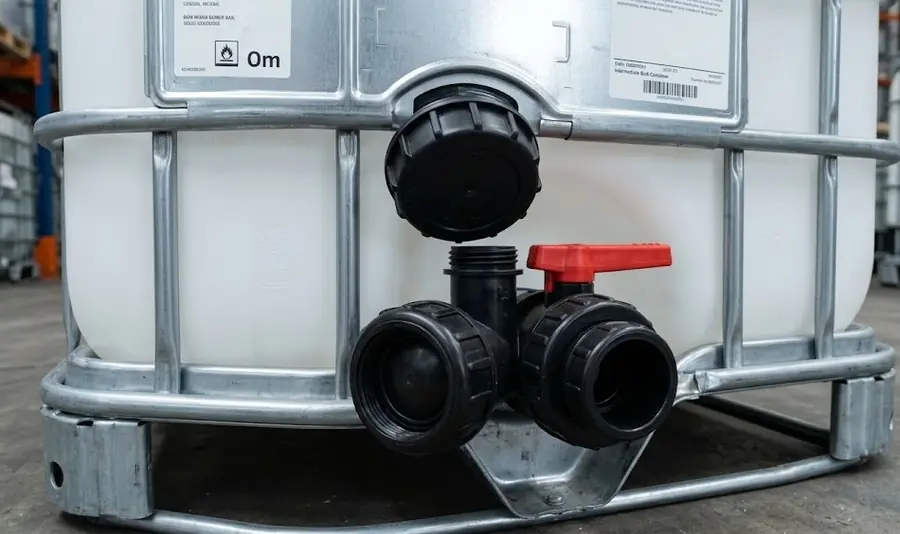
Valves, caps, gaskets, and cage components are inspected individually. Worn or damaged parts are replaced with new components. Cage is checked for structural bends, weld integrity, and corrosion.
Final Grading
Tanks are assigned a grade (A, B, or C) based on cosmetic condition, bottle clarity, cage condition, and previous use history. Each tank is labeled with its grade, cleaning date, and certification.
Cleaning Standards by Grade
Food-Grade Reconditioning
For tanks intended to hold food-contact liquids (syrups, oils, beverages, etc.). Cleaning follows FDA 21 CFR guidelines. Tanks are sanitized at 180°F minimum, rinsed with potable water, and air-dried in a controlled environment. Residual testing confirms absence of contaminants below FDA action levels.
Industrial-Grade Reconditioning
For general industrial liquids — soaps, detergents, non-hazardous chemicals, water-based solutions. Standard triple-rinse protocol with appropriate detergent for previous contents. Pressure-tested and valve-inspected.
Chemical-Grade Reconditioning
For tanks that previously held or will hold industrial chemicals. Aggressive cleaning with chemical neutralization appropriate for previous contents. Full SDS documentation of previous use. Specialized gaskets and valve materials selected for chemical compatibility.
Inside Our Cleaning Process — A Closer Look
Every step in our reconditioning process has been refined over thousands of tanks. Here is a detailed look at what happens during each stage and why it matters for the quality of your reconditioned IBC tank.
Step 1: Initial Inspection — The Foundation of Quality
Before any cleaning begins, each tank is thoroughly documented. Our inspection team photographs the tank from multiple angles, records the manufacturer, manufacturing date, serial number, and any labels indicating previous contents. We review Safety Data Sheets (SDS) for previous materials to determine the appropriate cleaning protocol. Structural integrity is assessed — checking for cracks in the HDPE bottle, dents or bends in the steel cage, weld failures, and pallet damage. This initial assessment determines whether the tank is a candidate for reconditioning or should be routed to recycling. Approximately 15% of tanks received are diverted to recycling at this stage due to structural issues that cannot be safely remedied.
Step 2: Residual Removal — Safe and Compliant Drainage
Remaining contents are safely drained using gravity flow and, when necessary, compressed air assistance. The type of residual determines our handling protocol. Food-grade residuals (oils, syrups, juices) are collected and, where possible, donated to composting facilities or bio-fuel processors. Industrial residuals are collected in designated waste containers and disposed of through licensed waste management partners in full compliance with EPA regulations and local environmental ordinances. Hazardous residuals require special handling — our team is trained in HAZWOPER protocols and works with certified hazardous waste haulers. All residual removal is documented with waste manifests that are retained for a minimum of five years.
Step 3: Triple Rinse — The Core Cleaning Stage
Our triple rinse protocol is the heart of the cleaning process. The first rinse uses hot water (140°F) at high pressure to remove bulk residue from the tank interior, including material adhered to walls and in the discharge channel. The second rinse adds food-safe detergent appropriate for the previous contents — alkaline cleaners for organic residues, acid cleaners for mineral deposits, and solvent-based cleaners for petrochemical residues. The tank is agitated during this stage with rotating spray heads that ensure complete interior coverage. The third rinse uses potable water at 180°F minimum for sanitization — this temperature eliminates bacteria, mold, and biological contaminants. For food-grade tanks, the final rinse water is tested for pH, turbidity, and residual contaminants to confirm it meets FDA standards. Total rinse volume per tank is approximately 40 gallons, with 70% of rinse water captured and recycled through our water treatment system.
Step 4: Pressure Testing — No Leakers, Guaranteed
After cleaning, each tank is filled with water and pressurized to 2.5 PSI — slightly above the rated working pressure — for a minimum of 10 minutes. Our technicians visually inspect every inch of the tank during this test, looking for seepage at the valve, cap seal, and any stress points on the HDPE bottle. We also check for expansion or deformation under pressure that could indicate material fatigue. Tanks that fail pressure testing are immediately diverted to recycling — we never sell a tank that cannot hold pressure safely. The failure rate at this stage is approximately 3-5%, and every failure is logged and analyzed to identify patterns in tank age, manufacturer, or previous use that correlate with structural issues.
Step 5: Hardware Inspection — Every Component Matters
The valve assembly is removed, disassembled, and inspected individually. We check the valve body for cracks, the handle mechanism for smooth operation, the gasket for compression set and chemical deterioration, and the discharge opening threads for wear or cross-threading. Valves that pass inspection are reinstalled. Those that show any sign of compromise are replaced with new OEM-specification components. The top cap is inspected for seal integrity and thread condition. Gaskets are replaced as a standard practice — they are the most wear-prone component and the most common source of leaks. The steel cage is inspected tube by tube: checking welds for cracks, mesh panels for separation, corner braces for bending, and the overall structure for plumb and square. Minor surface rust is acceptable on Grade B and C tanks but is noted in the grading documentation.
Step 6: Final Grading — Transparent Classification
The grading stage is where our commitment to transparency becomes tangible. Each tank is assigned a grade based on a standardized rubric: bottle clarity (measured as percentage of light transmission), cage condition (rated on a 10-point scale), cosmetic appearance, and previous-use documentation. Grade A tanks have 80%+ bottle clarity, pristine cage, minimal wear, and food-grade previous-use history. Grade B tanks have moderate discoloration, minor cage wear, and non-hazardous industrial previous use. Grade C tanks have noticeable wear, potential cage dents, and varied previous use. Every tank receives a label with its grade, cleaning date, reconditioning facility, and a unique tracking number. This label stays with the tank throughout its service life and provides traceability back to our quality records.
Chemical-Grade vs Food-Grade Cleaning: Key Differences
Not all cleaning is the same. The protocols we follow depend entirely on the intended use of the reconditioned tank. Here is how our chemical-grade and food-grade processes differ in practice.
FDA 21 CFR Compliant Cleaning
- Only tanks with documented food-grade previous use are eligible — we never upgrade a chemical tank to food-grade status
- All detergents and sanitizers used are FDA-approved for food-contact surface cleaning
- Final rinse uses potable water heated to 180°F minimum for thermal sanitization
- Rinse water is tested for pH (target: 6.5–7.5), turbidity (target: <1 NTU), and microbial contamination (target: non-detect)
- Tanks are air-dried in a controlled environment to prevent recontamination from dust or airborne particles
- All gaskets and seals are replaced with food-grade (EPDM or silicone) components
- Each food-grade tank receives a cleaning certificate documenting the process, test results, and the cleaning date
- Complete SDS documentation of previous contents is included with every food-grade sale
Industrial Chemical Cleaning
- Tanks with industrial or chemical previous use are handled with content-specific neutralization protocols
- Cleaning agents are selected based on previous contents — alkaline for acids, acid for bases, solvent for organics
- Chemical neutralization verification using pH testing and, where appropriate, specific chemical assays
- Aggressive cleaning cycles may include heated solvent rinse, caustic wash, and acid passivation for stubborn residues
- Specialized gasket materials (PTFE, Viton, chemical-resistant EPDM) selected based on intended future use
- Valve materials matched to chemical compatibility — polypropylene, stainless steel, or PVDF options available
- Complete documentation of previous chemical contents, cleaning agents used, and neutralization test results
- Tank interior inspected for chemical staining, etching, or micro-cracking that could indicate material degradation
Quality Metrics & Certifications
We measure the quality of our cleaning process rigorously. These metrics are tracked daily and reviewed weekly to ensure consistent, high-standard output.
Less than 3% of tanks require a second cleaning cycle. Our process gets it right the first time.
Fewer than 1 in 200 tanks has any issue reported after delivery. Our quality control catches problems before they reach you.
Every single tank is pressure-tested. No exceptions, no shortcuts. If it doesn't hold pressure, it doesn't ship.
Our food-grade final rinse achieves thermal sanitization at 180°F — meeting FDA standards for food-contact surface cleaning.
Turnaround Times & Scheduling
We understand that time is money. Our reconditioning operation is designed for efficiency without compromising quality. Here is what to expect when you schedule cleaning services with EcoIBC.
Standard Reconditioning
3–5 business daysFor standard orders of 1 to 25 tanks. Includes full six-step reconditioning to your specified grade. Most orders within this range are completed in 3 days.
Rush Service
1–2 business daysNeed tanks fast? Our rush service prioritizes your order. Available for orders up to 15 tanks. Rush fee applies but gets your tanks cleaned and ready on an expedited timeline.
High-Volume Orders (25+)
5–10 business daysLarger orders are scheduled in batches for maximum efficiency. We coordinate with you on delivery timing and can stage partial deliveries to keep your operation running while the full order is processed.
Recurring Service Agreements
Scheduled weekly or monthlyFor businesses that generate used tanks on a regular basis, we offer recurring pickup and cleaning service. We collect your used tanks on a set schedule, recondition them, and return them — or provide exchange tanks so you never have downtime.
Before & After: What Reconditioning Achieves
Our reconditioning process transforms used, dirty, and worn IBC tanks into clean, tested, and ready-to-use containers. Here are the measurable improvements across key quality dimensions.
Need Tanks Cleaned?
Send us your tanks or have us pick them up. We'll return them spotless.
Schedule ServiceRelated Articles
Explore related guides and articles to compare options, plan purchases, and keep tanks in service longer.
IBC Cleaning Process
See each reconditioning step from intake inspection through final quality checks.
Read MoreIBC Inspection Checklist
Use a repeatable checklist before sending tanks for cleaning or reuse.
Read MoreFood Grade vs Industrial IBCs
Match cleaning protocols to the compliance level your operation actually needs.
Read MoreFrequently Asked Questions
Answers to common questions about cleaning protocols, reconditioning standards, and turnaround timing.
What does your IBC cleaning and reconditioning service include?
The process includes inspection, residual removal, washing, pressure testing, hardware review, and final grading so tanks can be returned ready for reuse.
Can you clean tanks for food-grade and industrial use?
Yes. Cleaning protocols vary by intended use, previous contents, and documentation requirements, including food-grade, industrial, and chemical applications.
How do you determine whether a tank can be reconditioned?
We inspect the bottle, cage, pallet, valve area, and previous-contents history. Tanks with structural failure or unacceptable contamination are diverted from resale.
Do cleaned tanks get pressure tested before release?
Yes. Pressure testing is part of the quality process to confirm the tank, valve, and seals hold properly before the unit is approved for use.
How long does IBC reconditioning usually take?
Turnaround depends on quantity, service level, tank condition, and required grade, but scheduling can be tailored for standard, rush, or recurring work.