IBC Totes & Tanks
Used, reconditioned, and occasionally new intermediate bulk containers. Every tank is inspected, graded, and ready for immediate use. Food-grade, industrial, and chemical-grade options — all at a fraction of the new price.
Request Pricing
Tell us what tanks you need — quantity, grade, and size — and we'll send you a quote within 24 hours.
Available Tank Types
We carry the most common IBC sizes and configurations, thoroughly cleaned and inspection-ready.
275 Gallon IBC Tote
The industry standard. Our 275-gallon IBC totes are the most popular choice for liquid storage and transport. Available in food-grade, industrial, and chemical-grade configurations. Every unit is pressure-tested, cleaned to specification, and fitted with a new or inspected valve.
SPECIFICATIONS
- •Capacity: 275 gallons (1,040 liters)
- •Dimensions: 48″ × 40″ × 46″
- •Weight: ~130 lbs (empty)
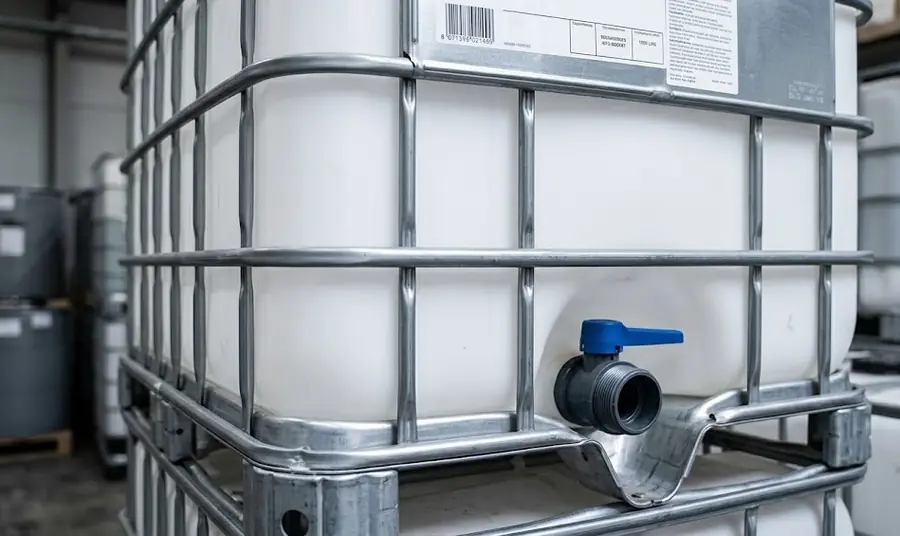
- •Material: HDPE bottle in galvanized steel cage
- •Pallet: Wood or composite
- •Valve: 2″ butterfly or ball valve
- •Opening: 6″ threaded cap
330 Gallon IBC Tote
When you need extra capacity without changing your footprint. The 330-gallon tote has the same base dimensions as the 275 but adds 7 inches of height for 20% more volume. Ideal for operations where maximizing storage density is critical.
SPECIFICATIONS
- •Capacity: 330 gallons (1,249 liters)
- •Dimensions: 48″ × 40″ × 53″
- •Weight: ~145 lbs (empty)
- •Material: HDPE bottle in galvanized steel cage
- •Pallet: Wood or composite
- •Valve: 2″ butterfly or ball valve
- •Opening: 6″ or 8″ threaded cap
Our Grading System
Every IBC tank we sell is assigned a clear, honest grade so you know exactly what you're getting. No surprises, no guesswork.
Grade A
Like New- Minimal cosmetic wear
- Previously held food-grade or clean liquids
- Bottle clarity: 80%+ transparent
- All original hardware intact
- New or near-new valve
- Suitable for food-grade applications
Grade B
Good Condition- Moderate cosmetic wear
- Previously held non-hazardous industrial liquids
- Bottle may have slight discoloration
- Cage fully intact, minor surface rust possible
- Valve inspected and functional
- Ideal for industrial and agricultural use
Grade C
Functional- Visible wear and cosmetic imperfections
- Previously held various industrial products
- Bottle discolored but structurally sound
- Cage may have dents, welds intact
- Valve replaced if needed
- Best for non-critical storage and utility use
275 vs 330 Gallon — Side-by-Side Comparison
Choosing between a 275-gallon and 330-gallon IBC tote depends on your volume needs, storage space, and handling equipment. Here is a detailed comparison to help you decide.
| Specification | 275 Gallon | 330 Gallon |
|---|---|---|
| Liquid Capacity | 275 gal (1,040 L) | 330 gal (1,249 L) |
| Height | 46 inches | 53 inches |
| Width | 40 inches | 40 inches |
| Depth | 48 inches | 48 inches |
| Empty Weight | ~130 lbs | ~145 lbs |
| Full Weight (water) | ~2,423 lbs | ~2,896 lbs |
| Bottle Material | HDPE (High-Density Polyethylene) | HDPE (High-Density Polyethylene) |
| Cage Material | Galvanized Steel Tube & Mesh | Galvanized Steel Tube & Mesh |
| Standard Valve | 2″ Butterfly or Ball Valve | 2″ Butterfly or Ball Valve |
| Top Opening | 6″ Threaded Cap | 6″ or 8″ Threaded Cap |
| Pallet Base | Wood or Composite | Wood or Composite |
| Stackable | Yes (2 high when empty) | Yes (2 high when empty) |
| Forklift Compatible | Yes — 4-way entry | Yes — 4-way entry |
| Pallet Jack Compatible | Yes — 2-way entry | Yes — 2-way entry |
| Typical Price (Reconditioned) | 40–60% less than new | 40–60% less than new |
| Best For | Standard storage & transport | Max capacity, same footprint |
Material Composition & Construction
Understanding what goes into an IBC tank helps you make informed decisions about which grade and configuration is right for your application. Every component serves a specific function.
HDPE Bottle (Inner Container)
The inner container is blow-molded from high-density polyethylene (HDPE) — a thermoplastic known for excellent chemical resistance, impact strength, and UV stability. HDPE is FDA-approved for food contact, making it safe for beverages, oils, and food-grade liquids. The bottle wall thickness ranges from 2 to 3 mm, providing a balance between structural integrity and weight efficiency. HDPE is also highly recyclable and maintains its mechanical properties through multiple recycling cycles.
Galvanized Steel Cage (Outer Frame)
The steel cage provides structural support and stackability. Made from carbon steel tubes and welded mesh panels, the cage is hot-dip galvanized to resist corrosion. The galvanization layer (zinc coating) protects the steel from moisture, chemicals, and general wear. Corner braces and reinforcing bars ensure the cage maintains its shape under stacking loads. The cage also features forklift and pallet jack access points for easy material handling.
Pallet Base
IBC tanks sit on either wooden or composite pallets. Wooden pallets (typically hardwood) are common and cost-effective but can absorb moisture and harbor pests. Composite pallets (HDPE or galvanized steel) are more durable, hygienic, and preferred for food-grade and clean-room applications. The pallet provides 4-way forklift access and 2-way pallet jack entry. All pallets are inspected during reconditioning and replaced if structurally compromised.
Valve Assembly
The bottom discharge valve is typically a 2-inch butterfly or ball valve made from polypropylene with an EPDM gasket. Butterfly valves allow for quick, high-flow dispensing, while ball valves provide more precise flow control. During reconditioning, valves are inspected for wear, seal integrity, and flow performance. Worn valves are replaced with new OEM-spec components. Specialized valve materials (stainless steel, PTFE) are available for aggressive chemical applications.
Recommended Uses by Grade
Different industries have different requirements. Here is how our grading system maps to real-world applications — so you can choose the right tank for your specific use case without overpaying.
Grade A — Premium Applications
Syrups, juices, edible oils, flavorings, beverage concentrates, honey, sauces
Purified water, pharmaceutical intermediates, excipients, sanitization solutions
Lotions, shampoos, essential oils, fragrances, cosmetic bases, serums
Drinking water storage, emergency water supply, water delivery services
Grade B — Industrial Applications
Non-hazardous solvents, detergents, soaps, water-based paints, cleaning solutions
Liquid fertilizers, crop protection chemicals, herbicides, insecticides, irrigation
Coolants, lubricants, adhesives, coatings, raw material storage, process water
Chlorine solutions, coagulants, pH adjusters, water softening chemicals
Grade C — Utility & Storage
Dust suppression water, concrete admixtures, form release agents, site storage
Irrigation water, liquid mulch, compost tea, site water storage
Harvesting systems, garden irrigation, non-potable water storage
Waste oil collection, non-critical fluid storage, workshop utility use
Frequently Asked Questions About IBC Totes
Got questions? Here are the answers to the most common questions we hear from customers about our IBC tanks, grading, and ordering process.
What is the difference between a 275-gallon and 330-gallon IBC?
The main difference is height and capacity. Both tanks share the same 48″ x 40″ footprint, so they fit on the same pallets and in the same storage spaces. The 330-gallon tank is 7 inches taller (53″ vs 46″) and holds about 20% more liquid. Choose the 330 if you need maximum capacity without changing your logistics setup. Stick with the 275 if ceiling height, weight limits, or stacking considerations are a factor.
Are reconditioned IBC tanks safe for food storage?
Yes — Grade A reconditioned tanks are cleaned and sanitized following FDA 21 CFR guidelines for food-contact containers. Our food-grade reconditioning protocol includes triple hot-water rinse at 180°F, food-safe detergent wash, potable water final rinse, and residual testing to confirm absence of contaminants below FDA action levels. We only certify tanks as food-grade if they previously held food-grade materials and pass all testing criteria.
How long do reconditioned IBC tanks last?
A well-maintained reconditioned IBC tank can provide 2 to 4 years of reliable service per reconditioning cycle, depending on what it stores, how it is handled, and the environmental conditions. The HDPE bottle is rated for a minimum of 5 years from its original manufacturing date under normal conditions. Many tanks can be reconditioned 2 to 3 times over their total lifespan, effectively multiplying their useful life to 10 years or more.
Can I see what was previously stored in a tank?
Yes. We track and document the previous contents of every tank based on labels, Safety Data Sheets (SDS), and information provided by the previous owner. This documentation is included with your purchase so you know exactly what the tank held before. For food-grade applications, we only sell tanks that previously held food-grade materials — we never "upgrade" a chemical tank to food-grade through cleaning alone.
What if a tank arrives damaged or leaks?
Every tank is pressure-tested before it leaves our facility, so leaks are extremely rare. However, if a tank arrives damaged due to shipping or has a defect we missed, we will replace it at no cost. Contact us within 48 hours of delivery with photos of the issue, and we will arrange a replacement or credit immediately. Our goal is zero defects and 100% customer satisfaction.
Do you offer volume discounts?
Absolutely. We offer tiered pricing based on order quantity. Significant discounts begin at 10+ tanks and increase at the 25+, 50+, and 100+ levels. We also offer recurring order agreements for businesses that need regular tank deliveries — these contracts come with locked-in pricing and priority inventory allocation. Contact us for a custom volume quote.
Can I pick up tanks at your facility?
Yes. Our Vernon, CA facility is open Monday through Friday, 8 AM to 5 PM, and by appointment on Saturdays. You are welcome to inspect tanks in person before purchasing. We can load your truck or trailer with a forklift. Just let us know when you plan to visit so we can have your order staged and ready.
What payment methods do you accept?
We accept cash, check, ACH bank transfer, wire transfer, and all major credit cards. For established business accounts, we offer Net 30 payment terms with approved credit. Volume orders may qualify for additional financing arrangements. Contact our team to discuss the best payment option for your business.
Need More Information?
Related Articles
Explore related guides and articles to compare options, plan purchases, and keep tanks in service longer.
IBC Tanks vs Drums
Compare shipping density, handling, and total storage efficiency before ordering.
Read MoreIBC Inspection Checklist
Use a simple checklist to evaluate tote condition before receiving or buying.
Read MoreSeasonal IBC Maintenance
Protect tote inventory from UV, freezing conditions, and long outdoor storage.
Read More